How to sell your content as a tipster

If you're reading this, there's a good chance you've already done the part that most people never manage to get right.
Maybe you've spent months building a Telegram channel from scratch. Maybe you've been sharing picks on X, posting match analysis on Instagram, or spending your evenings discussing games with people who genuinely care about your opinion. Whatever the platform, the process is usually the same. At first, it feels like nobody is paying attention. Then a few people start following. A few more begin interacting with your content. Over time, those numbers grow and you realise you've built something valuable: an audience that trusts your judgement.
The frustrating part is that trust doesn't automatically translate into income.
This is where many tipsters hit a wall. From the outside, everything looks promising. Followers are increasing, engagement is healthy and people seem interested in what you're sharing. Naturally, the next step feels obvious: if people value the content, surely some of them will be willing to pay for it.
In reality, that transition is rarely as straightforward as it sounds.
I've seen creators with relatively small audiences generate consistent revenue from their content, while others with thousands of followers struggle to sell anything at all. In most cases, the difference has very little to do with the quality of the predictions. What separates the two is usually how well they communicate their value and how much trust they've built along the way.
That's why selling content as a tipster isn't really about selling picks. It's about helping people understand why your perspective is worth paying attention to in the first place and why your betting content provides value worth paying for.
The mistake most tipsters make
One thing that becomes obvious after spending time around betting communities is that many tipsters become obsessed with results.
On the surface, that makes perfect sense. Better results should lead to more sales, shouldn't they?
The reality is a bit more complicated than that.
Nobody is saying performance doesn't matter. If people don't believe you're knowledgeable, the conversation ends before it even begins. But once you've reached a certain level of credibility, results stop being the only factor that influences whether somebody is willing to pay for your content.
Think about the creators you follow yourself. Chances are there are people whose opinions you trust even when they get things wrong from time to time. That's because trust isn't built on a single winning streak. It's built on consistency, transparency and the feeling that someone genuinely knows what they're talking about.
Before anyone decides to spend money, they're usually asking themselves a series of questions. Does this person understand the sport they're covering? Are they honest about their results? Will they still be producing quality content six months from now?
Those questions aren't answered by one successful prediction. They're answered through months of interaction and observation.
The tipsters who monetize successfully tend to understand this. They spend just as much time building credibility as they do analysing matches and building a sustainable sports betting tipster brand.
Why followers decide to pay
A common mistake is assuming that people pay for betting predictions.
Of course, predictions are part of the equation. But if picks were the only thing that mattered, nobody would ever buy premium content. There are more free predictions available online today than most people could consume in a lifetime.
What people are actually paying for is something much harder to quantify.
They're paying for confidence. They're paying for convenience. They're paying because they trust somebody else's judgement enough to let that person save them time.
Most followers don't want more information. If anything, they're already overwhelmed by it. Every day brings new statistics, new opinions, new betting models and new predictions. The challenge isn't finding information anymore. The challenge is deciding which information deserves attention.
That's where trusted creators stand out.
When someone follows your content regularly, they're not simply consuming picks. They're learning how you think, how you analyse games and how you approach decision-making. Over time, that familiarity becomes valuable in itself.
The creators who understand this rarely position themselves as people who sell predictions. Instead, they become known for a particular perspective, style of analysis or area of expertise. That's often what makes the difference between content people consume for free and content they're willing to pay for through a tipster subscription or premium betting community.
Why some content sells and other content doesn't
One of the biggest shifts happens when you stop thinking about the content you're producing and start thinking about the experience your audience is having.
Many tipsters naturally focus on output. They talk about the number of picks they publish, the leagues they cover or how active their channels are throughout the week.
The problem is that audiences don't always evaluate content in the same way creators do.
Someone considering a subscription isn't usually counting how many predictions they'll receive. They're asking themselves a much simpler question: will this make my life easier or more valuable in some way?
That's why I've seen creators publish far less content than their competitors and still attract more paying subscribers. It sounds counterintuitive until you realise that people rarely pay for volume. They pay for relevance.
A well-researched insight that helps someone make a better decision can be worth far more than dozens of average posts.
The key is making that value obvious. When people immediately understand what makes your content useful, the process of selling betting predictions becomes significantly easier. When they don't, even excellent analysis can struggle to gain traction.
Most buying decisions happen before you ever sell anything
One thing that often gets overlooked is that people usually decide whether they trust you long before you ask them to buy anything.
By the time you launch a premium product, paid betting channel or subscription service, most followers have already formed an opinion. They've watched how you communicate, how consistent you've been and how you react when things don't go your way.
Every post leaves an impression, even when it feels insignificant. A short pre-match analysis, a post-game reflection or a quick update after a difficult weekend all contribute to the way people see you.
Audiences pay attention to details.
They notice whether you're transparent when results aren't great. They notice whether you explain your reasoning or simply post picks without context. They notice whether your behaviour stays consistent regardless of whether you're winning or losing.
Ironically, some of the strongest trust signals come from difficult periods rather than successful ones.
Anybody can celebrate a winning streak. What often leaves a lasting impression is how a creator handles setbacks, mistakes and disappointing results.
That's where credibility is built.
reinforces trust over time.
Knowing when your audience is ready
One question that comes up frequently is whether there's a specific audience size required before monetizing betting content becomes realistic.
In my experience, there isn't.
I've seen creators with a few hundred highly engaged followers generate meaningful revenue, while others with audiences ten times larger struggle to convert anyone into a paying customer.
Engagement tends to be a much better indicator than follower count.
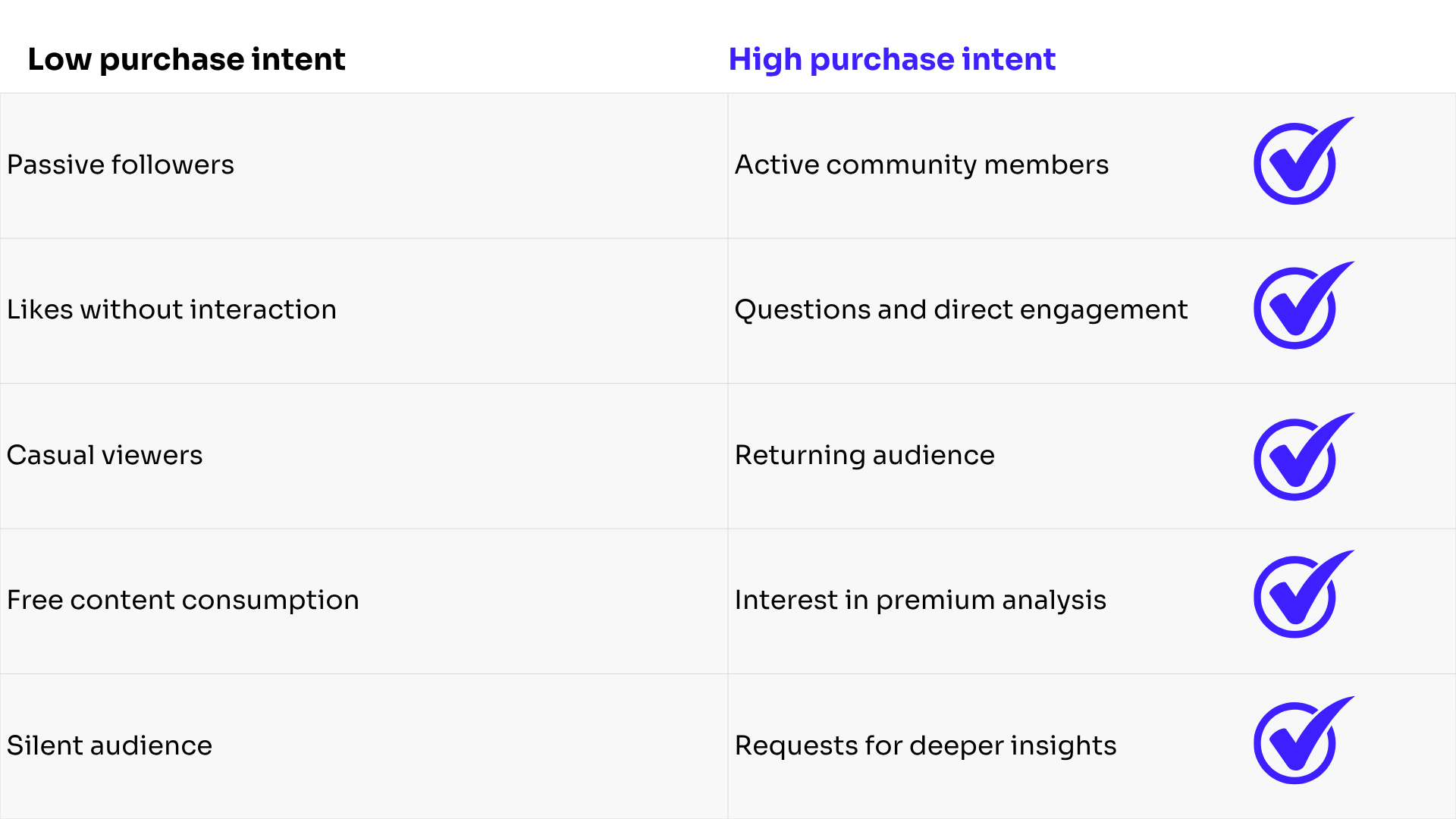
When people actively participate in discussions, ask questions, respond to your content and seek out your opinion, they're demonstrating something far more valuable than passive attention.
In many cases, your audience will signal their interest before you formally offer anything for sale.
They'll ask for more detailed analysis. They'll want additional content around certain competitions. They'll look for ways to get deeper access to your insights.
Those moments are often easy to overlook, but they're usually a sign that demand already exists.
The mistake many tipsters make is waiting for some perfect milestone before considering betting content monetization. More often than not, the opportunity appears long before they feel ready to act on it.
Turning an audience into a business
At some point, every content creator reaches a crossroads.
You can continue treating your content as a hobby, or you can explore the possibility of turning it into a business. Neither option is inherently better than the other, but if your goal is to generate income from your expertise, it's important to understand what monetization really means.
In most cases, monetization isn't a separate project you suddenly decide to launch. It's what happens when enough people begin to see genuine value in what you're already doing and decide to support your work through premium subscriptions.
The creators who succeed aren't always the smartest analysts or the people with the largest audiences. More often than not, they're the ones who understand their followers, communicate clearly and spend years building trust before asking for anything in return.
If you've already built an audience around your content, you're probably closer to monetizing your audience it than you think.
The challenge isn't finding people willing to pay. The challenge is helping them understand why your content deserves their attention in the first place.
Ready to take the next step?
premiumpay helps tipsters and content creators turn engaged audiences into recurring revenue through premium subscriptions, automated access management and a seamless payment experience.
Start monetizing